
Structural Basement Wall Repair
Reinforce bowed, bowing, or leaning basement walls with advanced carbon fiber or steel systems.
How Do I Tell If a Wall Is Actually Bowing?
These are the warning signs worth checking before water, movement, or humidity turns into a larger basement problem.

Why Is My Basement Wall Bowing or Cracking?
Heavy clay soil doesn't just cause leaks — over the years, it can physically push hard enough against a block or concrete wall to bow it inward, crack it horizontally, or tilt the top of it out of position. Left alone, that's a structural problem, not just a cosmetic one.
How Do You Stabilize a Bowing Wall?
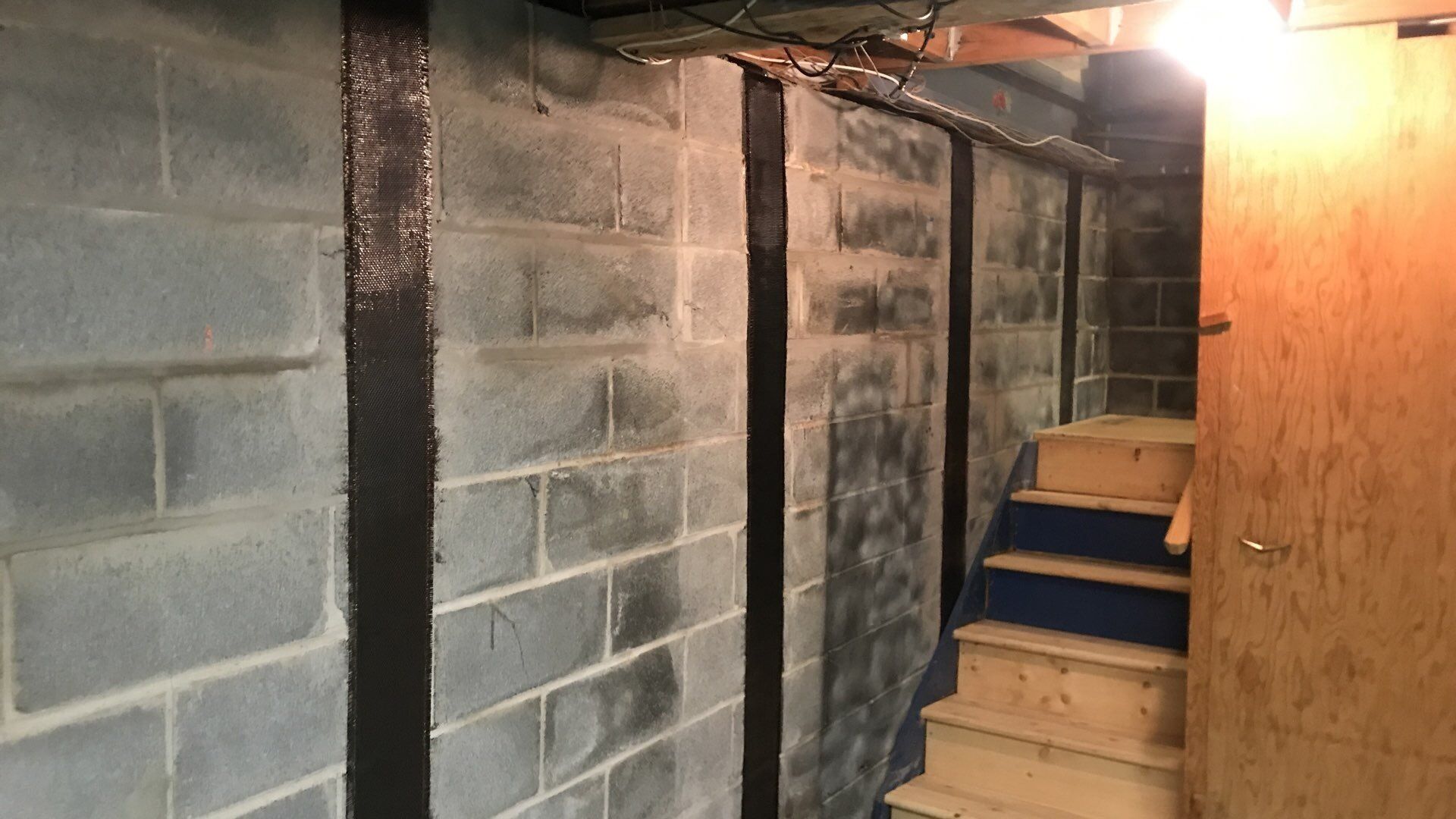
Depending on how far the wall has moved, contractors will either bond carbon fiber reinforcement straps directly to the wall with structural epoxy, or install steel wall anchors that connect the wall to soil plates set out in the yard so we can apply gradual tension over time.
Can the Wall Actually Be Pulled Back Straight?
Either approach stops the wall from moving any further right away, and with anchors, we can often pull it back toward plumb over time — not just hold it where it is.
Carbon Fiber, Steel, or Anchors — What Fits My Wall?
Structural Basement Wall Repair is not a one-size-fits-all fix. It starts with understanding the visible symptoms, then matching the repair system to the actual moisture, drainage, movement, or finish condition in the basement.
- Carbon Fiber Bracing Best for bowing walls with less than 2 inches of movement.
- Steel I-Beam Braces Best for severely bowed block walls requiring robust support.
- Helical Wall Anchors Best for structural correction using exterior soil leverage.
Built Around The Actual Cause
Specialists look beyond the surface symptom so the repair plan fits the wall, floor, soil, water source, and homeowner goal.
Why Are So Many Older Block Walls in Birmingham Affected?
Clay soil around Jefferson County can push hard against basement walls after repeated wet seasons. Wall repair should address both structure and water pressure.
- Call sooner if Call quickly if the wall is moving, bowing, or showing horizontal cracks.
- Plan ahead if Schedule a structural review if cracks are small but changing season to season.
- Avoid Covering bowing walls with finished framing
Birmingham Conditions Matter
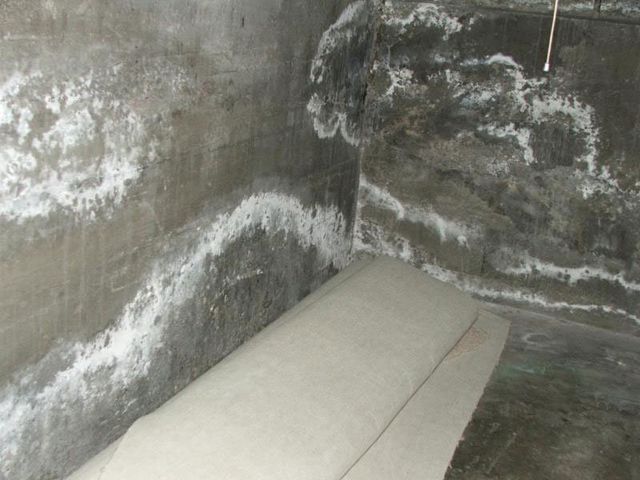
Porous block foundations in older Birmingham areas like Woodlawn, East Lake, Downtown, and Avondale are highly vulnerable to lateral soil pressures. Steel beam or strap reinforcement preserves these foundations for decades.
What's Involved in Reinforcing a Basement Wall?
The right solution starts with inspection, not guesswork. Specialists confirm the likely cause, explain the repair options, then complete the work with materials suited for below-grade conditions.
- Inspect Measure wall deflection and crack pattern
- Confirm Check soil pressure, drainage conditions, and wall material
- Recommend Determine whether carbon fiber, steel anchors, or bracing is appropriate
Inspection First, Then Repair
The goal is a clear scope: what was found, why it matters, what should be repaired, and what can safely wait.
Why Does This Kind of Repair Need a Specialist?
Military-Grade Fiber
Carbon fiber straps are 10 times stronger than steel.
Low Profile
Carbon fiber sits flat, letting you paint or finish walls easily.
Soil Wall Anchors
Provides mechanical leverage to correct leaning walls.
Structural Engineering
All repair designs reviewed for safety and structural codes.
What's Involved in Reinforcing a Basement Wall?
Surface Prep
Grinding the concrete clean to ensure strong bonding surfaces.
Strap Mounting
Applying structural epoxy and bonding carbon fiber straps.
Top/Bottom Anchoring
Anchoring the straps to the sill plate and floor footing.
Carbon Fiber, Steel, or Anchors — What Fits My Wall?
Every recommendation is matched to the source of the problem, not just the visible symptom.
Carbon Fiber Bracing
Best for bowing walls with less than 2 inches of movement.
Steel I-Beam Braces
Best for severely bowed block walls requiring robust support.
Helical Wall Anchors
Best for structural correction using exterior soil leverage.
What Makes a Bowing Wall Worse?
Below-grade repairs fail when the visible symptom gets covered but the pressure, movement, drainage, or moisture source stays active.
Covering bowing walls with finished framing
Waterproofing a wall without stabilizing movement first
Using cosmetic crack filler on pressure-related wall damage
Need Structural Basement Wall Repair in Birmingham?
Contact us today for a free on-site consultation and written estimate.
Why Are So Many Older Block Walls in Birmingham Affected?
Porous block foundations in older Birmingham areas like Woodlawn, East Lake, Downtown, and Avondale are highly vulnerable to lateral soil pressures. Steel beam or strap reinforcement preserves these foundations for decades.
Clay soil around Jefferson County can push hard against basement walls after repeated wet seasons. Wall repair should address both structure and water pressure.
Structural Basement Wall Repair Service Area in Birmingham Neighborhoods
Service is provided across Birmingham ZIP areas using the same inspection-first repair process, so local soil, rain, slope, and drainage conditions are considered before work begins.
Common Questions About Bowing Basement Walls
Carbon fiber strap installations cost between $800 and $1,500 per strap (usually spaced every 4 feet). Severely bowed walls requiring steel beams or wall anchors can range from $5,000 to $15,000+.
Yes. Using wall anchors or helical tiebacks, we can apply gradual tension to pull the wall back toward its original position, provided structural block integrity is still intact.
Look for horizontal cracks, blocks pushed inward, a wall that leans at the top, or gaps opening up between framing and the foundation wall.
No. Carbon fiber works for many stabilization cases, but severe movement may need anchors or steel bracing once homeowners have inspected the wall.