
Foundation Underpinning & Leveling
Transfer structure load to stable bedrock with heavy-duty steel pier underpinning systems.
What Are the Early Signs of Foundation Settling?
These are the warning signs worth checking before water, movement, or humidity turns into a larger basement problem.

Is My Foundation Actually Settling?
Stair-step cracks in the brick, doors that suddenly won't close right, floors that seem to slope a little more every year — these are usually signs that part of your foundation is settling, often because the soil underneath it (or, in parts of Birmingham, the limestone beneath that) isn't holding steady anymore.
How Do You Stabilize a Sinking Foundation?
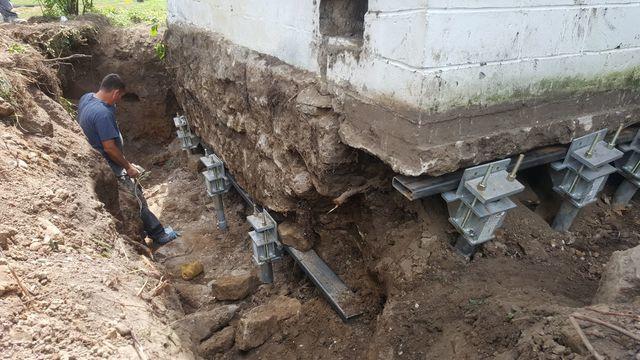
crews excavate access points at the footing, mount steel brackets, drive structural steel piers down to load-bearing bedrock or hard strata, and use those piers to lift and lock the foundation back into a stable position.
Can My Foundation Be Lifted Back to Level?
Your home ends up supported by something a lot more reliable than shifting clay or fill soil — and in a lot of cases, we can lift the settled section back toward level in the process, not just stop it from getting worse.
Push Piers, Helical Piers, or Jacks — What Fits My House?
Foundation Underpinning & Leveling is not a one-size-fits-all fix. It starts with understanding the visible symptoms, then matching the repair system to the actual moisture, drainage, movement, or finish condition in the basement.
- Hydraulic Push Piers Uses home weight to push piers down to load-bearing bedrock.
- Helical Screw Piers Screwed into soil mechanically, ideal for light structures or porches.
- Leveling Screw Jacks Adjustable steel posts to support sagging interior beams.
Built Around The Actual Cause
Specialists look beyond the surface symptom so the repair plan fits the wall, floor, soil, water source, and homeowner goal.
Why Does Jefferson County's Ground Cause This?
Some Birmingham-area homes experience settlement where clay soils shrink, fill soils compress, or limestone-related voids affect support. Underpinning should be based on the actual load path.
- Call sooner if Call promptly if settlement is active, cracks are widening, or doors suddenly stop closing.
- Plan ahead if Schedule an evaluation before remodeling if the foundation shows old movement signs.
- Avoid Patching cracks before stabilizing the footing
Birmingham Conditions Matter
Jefferson County contains pockets of karst limestone geology, which can drop suddenly, causing foundation sinkage. Helical and push piers bypass this topsoil to protect structures.
What Happens During a Pier Installation?
The right solution starts with inspection, not guesswork. Specialists confirm the likely cause, explain the repair options, then complete the work with materials suited for below-grade conditions.
- Inspect Document settlement patterns inside and outside the home
- Confirm Identify affected footing areas and load points
- Recommend Determine whether push piers, helical piers, or interior supports fit the structure
Inspection First, Then Repair
The goal is a clear scope: what was found, why it matters, what should be repaired, and what can safely wait.
Why Does This Need Engineering, Not Just Guesswork?
Bedrock Support
Piers reach past unstable clay down to solid bedrock.
Hydraulic Lift
Lifts sagging brickwork and restores interior door frames.
Engineering Oversight
All pier installations designed and stamped by engineers.
High Capacity
Steel brackets rated for heavy residential and commercial loads.
What Happens During a Pier Installation?
Footing Preparation
Excavating soil and clearing footing edges for brackets.
Pier Driving
Driving steel piers hydraulically down to load-bearing strata.
Lift & Lock
Applying hydraulic pressure to lift footing and locking bracket.
Push Piers, Helical Piers, or Jacks — What Fits My House?
Every recommendation is matched to the source of the problem, not just the visible symptom.
Hydraulic Push Piers
Uses home weight to push piers down to load-bearing bedrock.
Helical Screw Piers
Screwed into soil mechanically, ideal for light structures or porches.
Leveling Screw Jacks
Adjustable steel posts to support sagging interior beams.
What Mistakes Make Settling Worse Over Time?
Below-grade repairs fail when the visible symptom gets covered but the pressure, movement, drainage, or moisture source stays active.
Patching cracks before stabilizing the footing
Using shallow support where deeper bearing is required
Ignoring drainage issues that continue to weaken soils
Need Foundation Underpinning & Leveling in Birmingham?
Contact us today for a free on-site consultation and written estimate.
Why Does Jefferson County's Ground Cause This?
Jefferson County contains pockets of karst limestone geology, which can drop suddenly, causing foundation sinkage. Helical and push piers bypass this topsoil to protect structures.
Some Birmingham-area homes experience settlement where clay soils shrink, fill soils compress, or limestone-related voids affect support. Underpinning should be based on the actual load path.
Foundation Underpinning & Leveling Service Area in Birmingham Neighborhoods
Service is provided across Birmingham ZIP areas using the same inspection-first repair process, so local soil, rain, slope, and drainage conditions are considered before work begins.
Foundation Settling Questions We Get Asked Often
Installing underpinning piers ranges from $1,200 to $2,500 per pier. A typical settling corner or wall section requires 4 to 8 piers, bringing costs to $5,000–$16,000+.
Signs include stair-step cracks in brick mortar, doors that stick, cracked drywall over doors, and sloping basement floors.
Push piers use the weight of your home to drive steel down to stable bearing. Helical piers screw into the soil and tend to work well for lighter loads or tighter access.
Some gaps may improve during the lift, but masonry or drywall repairs are usually handled separately, after the foundation itself is stabilized.