
Sub-Floor Interior Waterproofing Systems
Perimeter drainage systems installed underneath your basement slab for reliable water collection and removal.
How Do I Know This Is My Problem?
These are the warning signs worth checking before water, movement, or humidity turns into a larger basement problem.
Why Is Water Coming Up Through My Basement Floor?
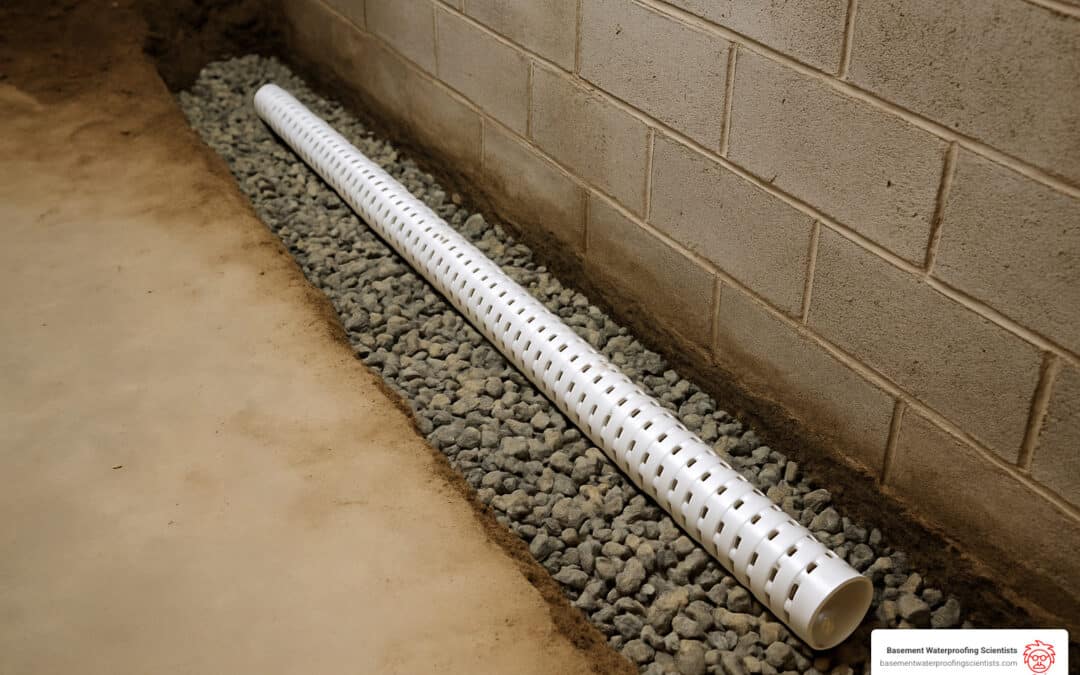
It's a specific kind of frustrating: your walls look fine, but water keeps showing up right at the edge of the floor, or your carpet's damp for no obvious reason. That's usually a rising water table pushing up underneath your slab, working its way in through the cove joint — the seam where your floor meets your wall — or through small cracks in the concrete itself.
How Do You Stop Water From Under the Slab?
crews open up the concrete about 12 inches in from the wall, dig a trench down to the footing, and lay a 4-inch perforated drain tile wrapped in filter fabric, then bury it in washed stone before resealing the slab flush with the rest of your floor.
What Happens to That Water Once the System's In?
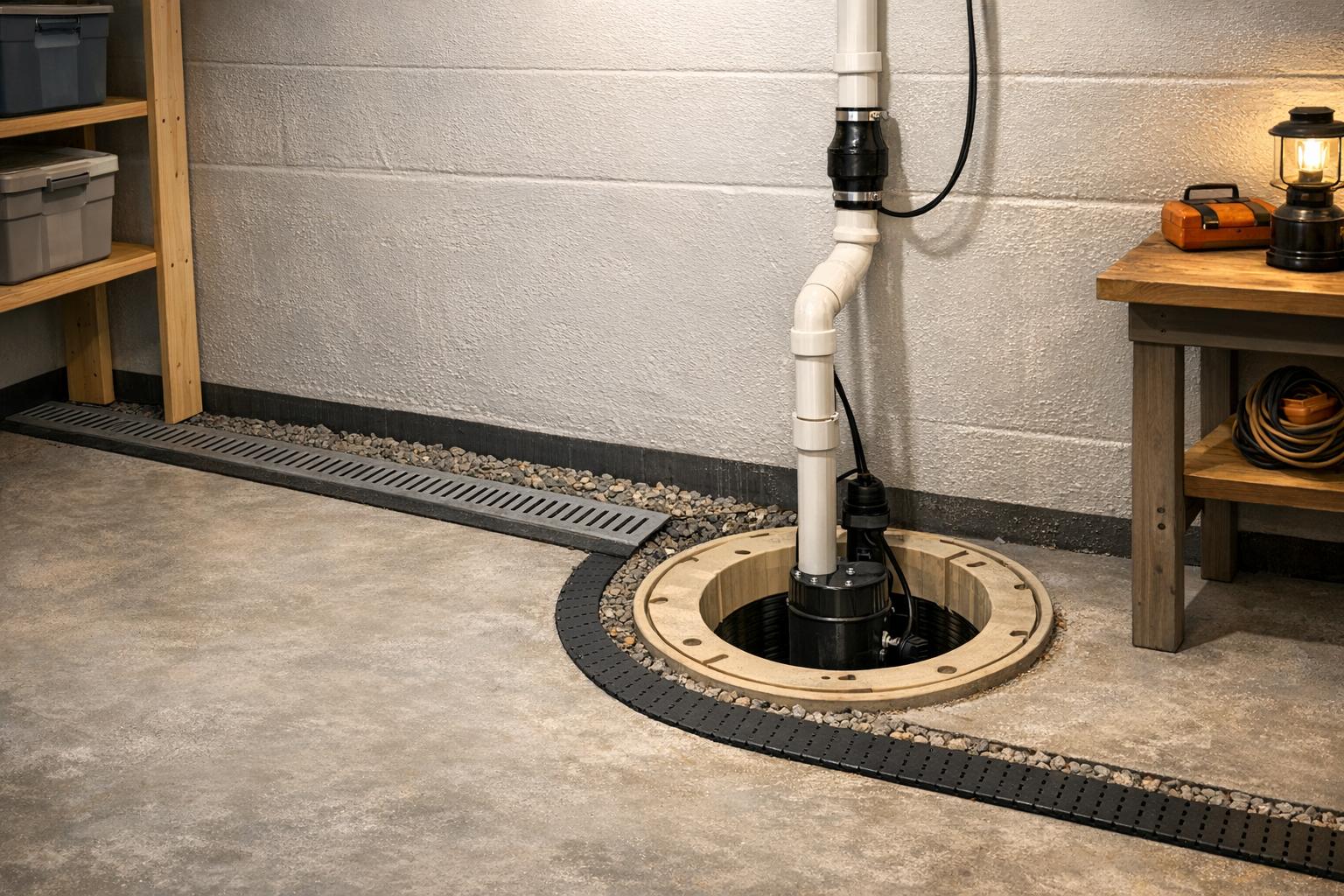
From that point on, water gets caught before it ever reaches the surface and gets routed straight to a sump basin — your floor stays dry, and so does whatever you've got down there.
What Are My Interior Drainage Options?
Sub-Floor Interior Waterproofing Systems is not a one-size-fits-all fix. It starts with understanding the visible symptoms, then matching the repair system to the actual moisture, drainage, movement, or finish condition in the basement.
- Cove Joint Drainage Directs water from the wall-floor connection down into the sub-floor pipe.
- Dual Sump Basins Redundant pump setups for large basements with heavy water inflow.
Built Around The Actual Cause
Specialists look beyond the surface symptom so the repair plan fits the wall, floor, soil, water source, and homeowner goal.
Why Do So Many Homewood and Vestavia Basements Need This?
Interior drainage is often practical in older Birmingham neighborhoods where exterior excavation would disturb driveways, patios, landscaping, or tight lot lines.
- Call sooner if Call soon if water reaches finished flooring or the sump pump cycles constantly during storms.
- Plan ahead if Schedule a check if dampness stays near the slab edge or appears after repeated rain.
- Avoid Sealing the cove joint without giving water a drainage path
Birmingham Conditions Matter
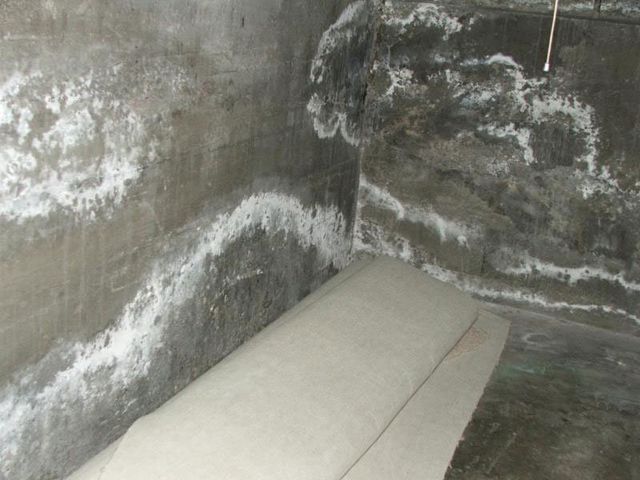
In areas like Homewood and Vestavia Hills, older homes sit on clay slopes where water pools under the slab after storms. An interior drainage system relieves this sub-slab pressure efficiently.
What Does Interior Waterproofing Actually Involve?
The right solution starts with inspection, not guesswork. Specialists confirm the likely cause, explain the repair options, then complete the work with materials suited for below-grade conditions.
- Inspect Inspect the cove joint and slab perimeter for seepage paths
- Confirm Check sump basin size, pump capacity, and discharge routing
- Recommend Confirm whether sub-slab pressure is the main water source
Inspection First, Then Repair
The goal is a clear scope: what was found, why it matters, what should be repaired, and what can safely wait.
Why Go With an Interior System Instead of Digging Up the Yard?
No Yard Damage
No exterior excavation required, preserving your lawn and patios.
Sub-Slab Relief
Releases hydrostatic pressure from directly beneath the floor.
Lifetime Performance
Non-clogging drain systems designed for decades of reliable service.
Fast Installation
Most residential interior projects completed in just 3 days.
What Does Interior Waterproofing Actually Involve?
Slab Trenching
Removing concrete along the perimeter walls to expose the dirt footing.
Tile Installation
Laying sloped perforated PVC pipes surrounded by clean washed gravel.
Concrete Resealing
Pouring concrete to patch the slab and restore a smooth floor surface.
What Are My Interior Drainage Options?
Every recommendation is matched to the source of the problem, not just the visible symptom.
Cove Joint Drainage
Directs water from the wall-floor connection down into the sub-floor pipe.
Dual Sump Basins
Redundant pump setups for large basements with heavy water inflow.
What Do Homeowners Usually Get Wrong Here?
Below-grade repairs fail when the visible symptom gets covered but the pressure, movement, drainage, or moisture source stays active.
Sealing the cove joint without giving water a drainage path
Using shallow channels that cannot handle sub-slab pressure
Skipping battery backup where power outages happen during storms
Need Sub-Floor Interior Waterproofing Systems in Birmingham?
Contact us today for a free on-site consultation and written estimate.
Why Do So Many Homewood and Vestavia Basements Need This?
In areas like Homewood and Vestavia Hills, older homes sit on clay slopes where water pools under the slab after storms. An interior drainage system relieves this sub-slab pressure efficiently.
Interior drainage is often practical in older Birmingham neighborhoods where exterior excavation would disturb driveways, patios, landscaping, or tight lot lines.
Sub-Floor Interior Waterproofing Systems Service Area in Birmingham Neighborhoods
Service is provided across Birmingham ZIP areas using the same inspection-first repair process, so local soil, rain, slope, and drainage conditions are considered before work begins.
Common Questions About Interior Basement Waterproofing
Most interior drainage projects cost between $3,000 and $7,500, depending on the perimeter length and flooring type.
No, we wrap the piping in filter fabric and surround it with clean stone to prevent soil and clay particles from entering the system.
Yes. A properly installed perimeter drain gives sub-slab water a controlled path to the sump basin instead of letting it rise through the cove joint.
Yes, but finished materials near the perimeter may need careful removal and replacement so the drain can be installed correctly.
Usually yes. The drain collects water, and the sump pump moves that water away from the foundation.